3D Architectural Visualization is transforming how architectural ideas are presented, approved, and marketed before construction begins. In today’s competitive architecture and real estate industry, clients, investors, and stakeholders want to see a project clearly before committing time and money. This growing demand has increased the need for the best architectural visualization services in Pakistan, especially for projects targeting local and international markets.
With the help of advanced 3D tools, architectural visualization converts design concepts into realistic images, animations, and walkthroughs. These visuals help bridge the gap between imagination and reality, allowing everyone involved to understand the project with confidence.
This article explains what 3D architectural visualization is, its major types, and the key business benefits it offers to architects, developers, and construction companies.
What Is 3D Architectural Visualization?
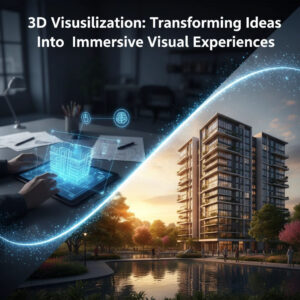
3D Architectural Visualization is the process of creating three-dimensional digital representations of buildings, interiors, landscapes, and urban spaces using specialized software. These visuals accurately represent architectural designs, materials, lighting, textures, and spatial relationships before actual construction starts.
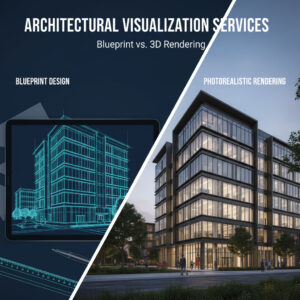
Unlike traditional 2D drawings or blueprints, 3D visualization provides a realistic and intuitive understanding of a project. Whether presented as a still image, animation, or interactive walkthrough, it allows both technical and non-technical audiences to easily interpret complex designs.
Architects, real estate developers, interior designers, and construction firms rely on professional visualization solutions to communicate ideas, secure approvals, market properties, and minimize costly design errors—especially when working with clients seeking the best architectural visualization services in Pakistan.
Why 3D Architectural Visualization Is Important Today
Modern construction projects are more complex than ever. Clients demand transparency, accuracy, and confidence before making major investments. 3D architectural visualization supports these needs by:
- Simplifying complex design concepts
- Reducing miscommunication between teams
- Allowing design experimentation before construction
- Improving client presentations and approval rates
With the rapid digital transformation of the construction industry, architectural visualization is no longer optional—it has become an essential part of the design and planning process.
Types of 3D Architectural Visualization
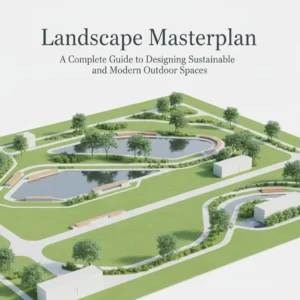
Exterior Architectural Visualization
Exterior visualization focuses on the outer appearance of a building. It showcases architectural style, façade details, surrounding landscapes, lighting conditions, and environmental context. These visuals are widely used for real estate marketing, project approvals, and investor presentations.
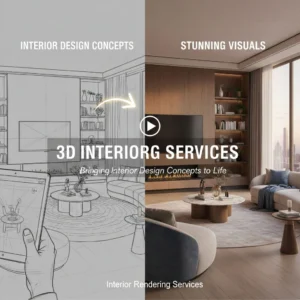
Interior Architectural Visualization
Interior visualization highlights indoor spaces such as living areas, kitchens, offices, hotels, and retail environments. It helps clients visualize layouts, furniture placement, lighting, colors, and textures, making it especially valuable for interior design and real estate projects.
3D Floor Plans
3D floor plans present a top-down view of a property with depth and clarity. Unlike traditional 2D plans, they show spatial relationships between rooms and furniture, helping buyers and stakeholders understand how spaces connect and function together.
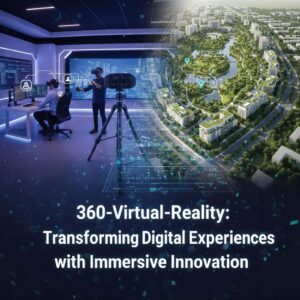
Architectural Animation and Walkthroughs
Architectural animations provide cinematic walkthroughs or flythroughs of a project. These animations demonstrate spatial flow and movement, making them ideal for exhibitions, presentations, and promotional videos.
Business Benefits of 3D Architectural Visualization
The value of 3D architectural visualization goes far beyond visual appeal. It serves as a powerful business tool that delivers measurable advantages.
Faster Client Approvals
Clear and realistic visuals eliminate confusion and help clients quickly understand design intent. This results in faster approvals and fewer revision cycles.
Improved Marketing and Sales
High-quality renders and animations attract attention and create emotional connections with buyers. Projects supported by the best architectural visualization services in Pakistan often gain stronger market trust and improved sales performance.
Reduced Design Errors and Costs
Visualization allows architects and developers to identify design issues early. Fixing problems at the design stage is significantly more cost-effective than making changes during construction.
Competitive Advantage
Companies that use professional 3D architectural visualization stand out from competitors relying on basic drawings. High-quality visuals enhance brand credibility and professionalism.
Better Team Communication
Architectural visualization ensures architects, engineers, contractors, and clients are aligned on the same vision, reducing misunderstandings and costly rework.
The Future of 3D Architectural Visualization
With advancements in real-time rendering, artificial intelligence, and immersive technologies, 3D architectural visualization continues to evolve. Interactive presentations, cloud-based collaboration, and hyper-realistic visuals are shaping the future of design communication.
Firms that invest in modern visualization techniques will be better positioned to meet rising client expectations and stay competitive in the long term.
Conclusion
3D Architectural Visualization has revolutionized how buildings are designed, presented, and sold. From exterior and interior renderings to animations and walkthroughs, visualization tools provide unmatched clarity and impact.
The benefits—faster approvals, stronger marketing, reduced risks, and improved collaboration—make architectural visualization a necessity in today’s visual-driven world. Presenting a project before it is built is no longer a luxury; it is a critical business requirement.
FAQs About 3D Architectural Visualization
What Is 3D Architectural Visualization?
3D architectural visualization is the creation of computer-generated images or animations that represent building designs before construction. It helps communicate design ideas clearly using realistic visuals.
What Is a 3D Floor Plan?
A 3D floor plan is a three-dimensional representation of a building layout that shows room sizes, furniture placement, and spatial relationships more clearly than 2D plans.
What Is a 3D Walkthrough Animation?
A 3D walkthrough animation is a video that simulates movement through a virtual building, allowing viewers to experience layout, lighting, and ambiance realistically.
What Is 3D Modeling?
3D modeling is the process of creating digital three-dimensional objects using specialized software. These models are the foundation for rendering, animation, and visualization.
What Is Photorealistic Rendering?
Photorealistic rendering produces highly realistic images that closely resemble real photographs by using advanced lighting, textures, shadows, and reflections.