Choosing a 3D visualization partner can make or break your project. I’ve seen too many architects and developers burn through budgets working with the wrong company, only to receive mediocre renders that don’t sell their vision. The truth is, finding the best 3D visualization company isn’t just about getting pretty pictures—it’s about finding a partner who understands your goals, delivers on time, and brings your designs to life in ways that wow clients and close deals.
Whether you’re an architect planning a residential complex, a real estate developer marketing luxury properties, or an interior designer presenting concepts to clients, this checklist will help you identify the best 3D visualization company for your specific needs. Let’s dive into the 10 essential features that separate the exceptional from the mediocre.
Why Choosing the Right 3D Visualization Partner Matters
Before we jump into the checklist, let’s talk about why this decision is so critical. A professional 3D visualization company doesn’t just create images—they become an extension of your design team. The right partner can help you win more projects, reduce revision cycles, and present your vision with such clarity that clients say “yes” faster.
On the flip side, choosing poorly can lead to missed deadlines, blown budgets, and renders that look more like video game graphics than photorealistic presentations. I’ve talked to countless professionals who learned this lesson the hard way. The good news? With this checklist, you won’t have to.
Feature #1 – Impressive and Diverse Portfolio
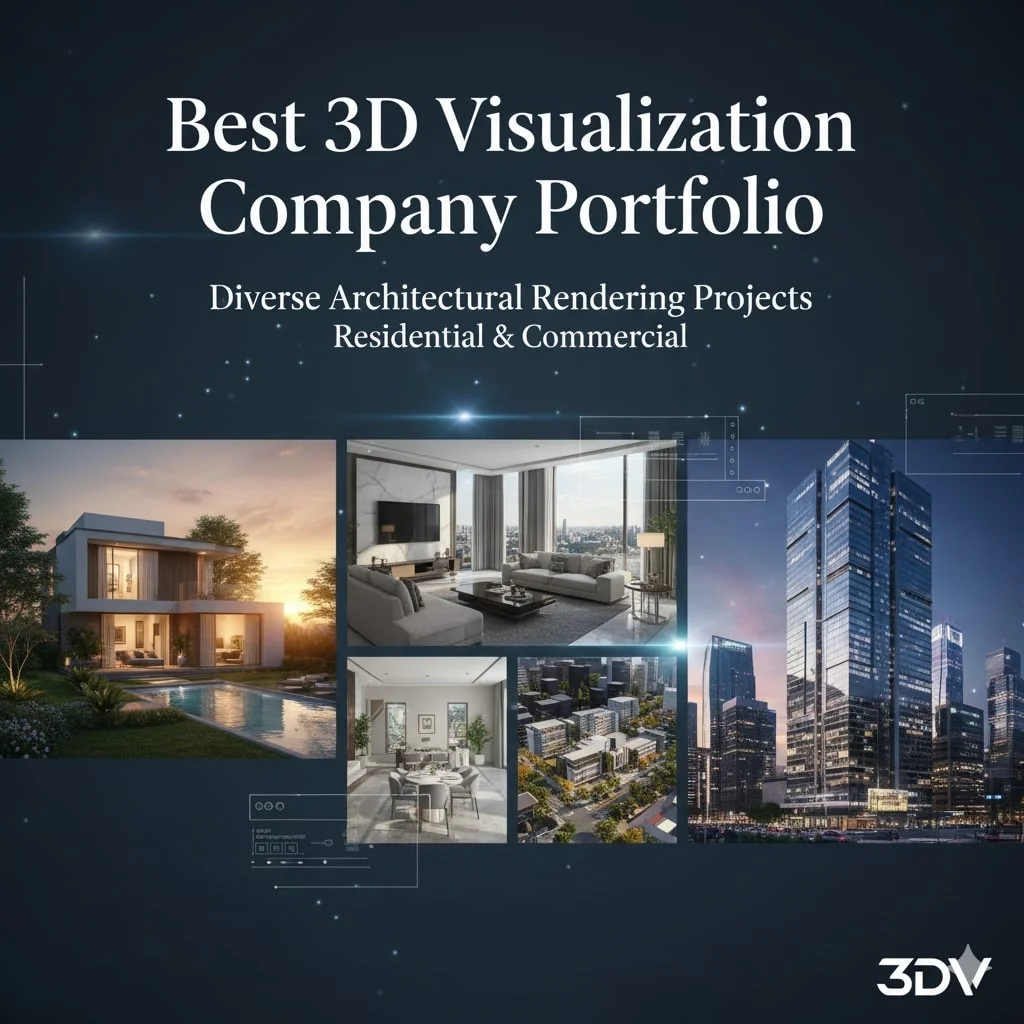
Here’s the thing: a company’s portfolio tells you everything you need to know about their capabilities. The best 3D visualization company will have a diverse portfolio showcasing different styles, project types, and levels of complexity.
When reviewing portfolios, look for:
- Photorealistic quality that makes you do a double-take
- Variety in project types (residential, commercial, hospitality, industrial)
- Different visualization styles (exterior, interior, aerial, walkthrough animations)
- Recent work from the past 1-2 years showing current capabilities
Red flags to watch for include portfolios with only 5-6 similar projects, outdated work from 5+ years ago, or renders that lack detail and realism. A strong 3D visualization company portfolio should make you excited about the possibilities for your own project.
Don’t just look at their website—ask for case studies specific to your industry. If you’re designing a hotel, you want to see hotel visualizations. If you’re working on residential towers, that’s what should be in front of you.
Feature #2 – Industry-Specific Experience
Not all visualization is created equal. An architectural visualization company that excels at residential projects might struggle with industrial facilities. Similarly, a company specializing in exterior architectural renders may not have the interior design expertise you need.
The best companies either specialize in your specific industry or have dedicated teams with deep experience in various sectors. This matters because:
- They understand industry-specific requirements and standards
- They know what resonates with your target audience
- They can anticipate challenges before they become problems
- They speak your language and understand technical drawings
Ask potential partners about their experience with projects similar to yours. How many have they completed? Can they show you examples? Do they understand the unique challenges of your industry? A professional 3D visualization partner should be able to discuss your project intelligently from the first conversation.
Feature #3 – Advanced Software and Technology
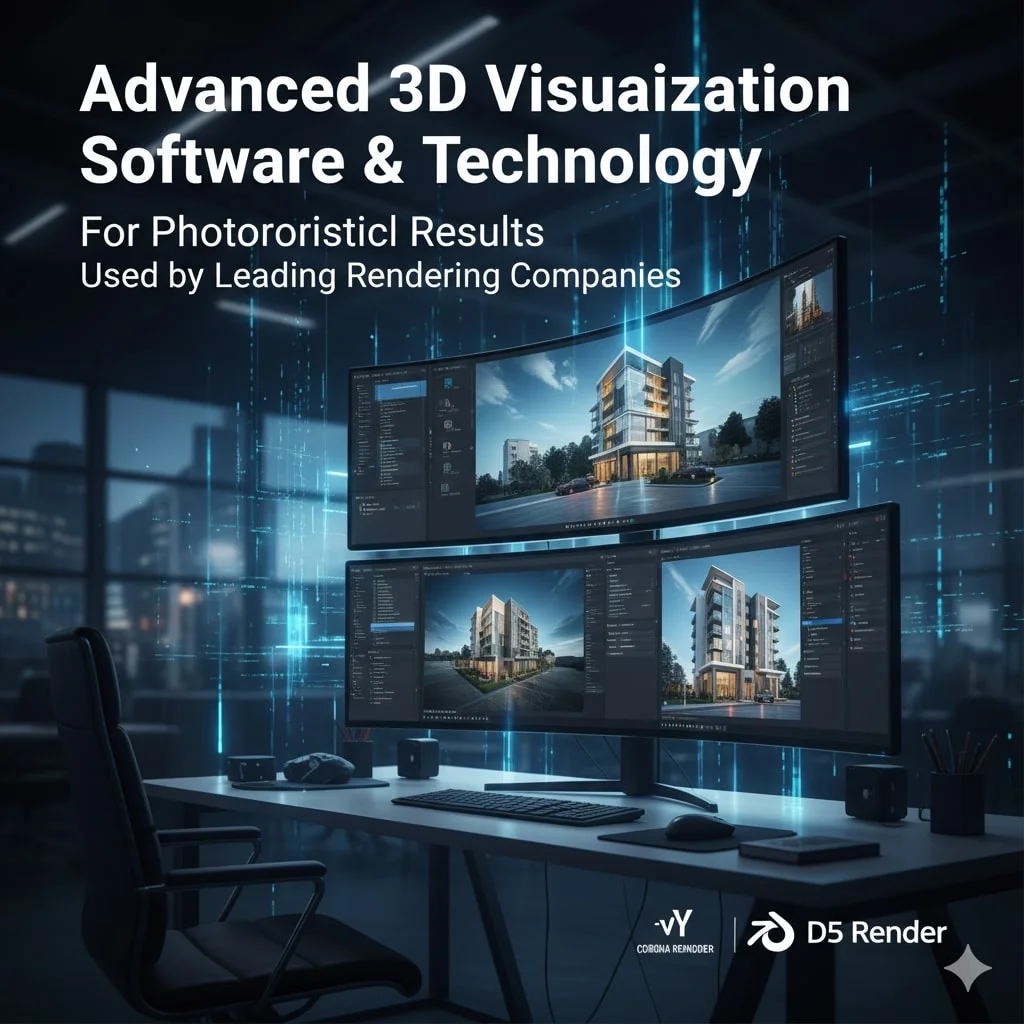
Technology moves fast in the visualization world. The best 3D visualization company stays ahead of the curve with cutting-edge software and rendering technology.
Industry-standard tools you should expect include:
- 3D Modeling Software: 3ds Max, SketchUp, Rhino, Blender, Revit
- Rendering Engines: V-Ray, Corona Renderer, Lumion, Enscape
- Post-Production: Photoshop, After Effects for final touches
- VR/AR Capabilities: For immersive presentations
But here’s what really matters—it’s not just about having the software, it’s about mastering it. A company using the latest technology but lacking expertise will still deliver mediocre results. Look for teams that combine advanced tools with years of hands-on experience.
Also ask about their rendering capabilities. Do they offer real-time rendering for faster iterations? Can they create VR experiences? What about 360-degree panoramas or interactive walkthroughs? Top 3D rendering companies continuously invest in new technology to give clients more options.
Feature #4 – Clear and Transparent Pricing
Nothing kills trust faster than surprise costs halfway through a project. The best 3D visualization company provides clear, transparent pricing from day one.
Professional pricing should include:
- Per-image pricing for static renders (exterior, interior, aerial)
- Per-minute rates for animations and walkthroughs
- Detailed breakdown of what’s included in each package
- Revision policy clearly outlined
- Rush fee structure if you need faster turnaround
- Additional services (virtual staging, video editing, music)
Be wary of companies that won’t provide written quotes or keep pricing vague until you’re committed. While the absolute cheapest option often delivers cheap-looking results, you also shouldn’t overpay. Get quotes from 3-4 companies and compare not just price, but value.
Ask questions like: What happens if I need extra revisions? How much does expedited delivery cost? What file formats do I receive? A transparent 3D visualization services provider will answer all these questions upfront.
Feature #5 – Fast Turnaround Without Compromising Quality
Time is money, especially in architecture and real estate. You need a partner who can deliver quality work quickly—not one or the other, but both.
The best 3D visualization company will:
- Provide realistic timelines upfront (not overpromise and underdeliver)
- Offer expedited services for urgent projects
- Use efficient workflows and render farms for faster processing
- Maintain quality standards even under tight deadlines
Typical turnaround times vary by complexity:
- Single exterior render: 3-5 business days
- Interior render: 3-5 business days
- Multiple views/angles: 7-10 business days
- Walkthrough animation (1 min): 10-15 business days
Rush services should be available but expect to pay 20-50% more for 24-48 hour turnarounds. What matters most is that the company communicates clearly about timelines and actually meets them. A quality 3D visualization partner never sacrifices their standards just to hit a deadline—they plan properly from the start.
Feature #6 – Strong Client Testimonials and Reviews

Social proof matters. Before committing to any 3D visualization company, dig into what their previous clients are saying.
Look for testimonials and reviews on:
- Their website (detailed case studies)
- Google Business Profile
- Industry directories (Houzz, Architizer)
- LinkedIn recommendations
- Independent review sites
Pay attention to specifics in reviews. Generic praise like “great work!” doesn’t tell you much. Look for detailed feedback about communication, revision handling, technical expertise, and final results. The best reviews tell a story about the client’s experience from start to finish.
Red flags include: no reviews anywhere, only generic testimonials without names/companies, or reviews that mention communication problems and missed deadlines. Top 3D visualization firms proudly showcase their client success stories with specific results and outcomes.
Don’t hesitate to ask for references you can contact directly. Any reputable company will happily connect you with satisfied clients.
Feature #7 – Flexible Revision Policy
Here’s a reality check: you’ll probably need revisions. Design is iterative, and visualization is no different. The best 3D visualization company builds flexibility into their process.
A solid revision policy should include:
- At least 2-3 revision rounds included in the base price
- Clear definition of what counts as a revision vs. a new project
- Reasonable timeline for implementing changes (24-48 hours typical)
- No surprise fees for minor adjustments
- Collaborative approach to getting details right
Some companies offer unlimited revisions, which sounds great but can sometimes mean they got it wrong the first time. Others include only one revision, which rarely covers all the refinements you’ll need. The sweet spot is usually 2-3 rounds of revisions with the option to purchase additional rounds if needed.
What qualifies as a revision? Typically: lighting adjustments, material changes, camera angle tweaks, landscaping modifications. What’s considered a new project? Major structural changes, completely new views, or additions of elements not in the original scope.
A professional 3D visualization partner will guide you through their revision process during the initial consultation so there are no surprises later.
Feature #8 – Excellent Communication and Project Management
I can’t stress this enough—communication can make or break your visualization project. The best 3D visualization company excels at keeping you informed every step of the way.
Look for:
- Dedicated project manager as your single point of contact
- Regular updates throughout the project (don’t leave you guessing)
- Multiple communication channels (email, phone, video calls, project management tools)
- Quick response times (within 24 hours for questions)
- Proactive communication about potential issues before they become problems
The initial consultation is your best indicator of communication quality. Do they ask detailed questions about your vision? Do they explain their process clearly? Are they responsive to your emails? If communication is poor before you hire them, it won’t magically improve after.
Professional architectural visualization services should include milestone check-ins where you review progress and provide feedback. This prevents the nightmare scenario of waiting two weeks only to discover they misunderstood your requirements.
Feature #9 – Technical Expertise and Problem-Solving Skills
Sometimes your project will present unique challenges. Maybe you’re working with an unusual material, complex geometry, or need to visualize something that doesn’t exist yet. The best 3D visualization company doesn’t just follow instructions—they solve problems.
Technical expertise shows up as:
- Ability to work from various file formats (CAD, Revit, SketchUp, even hand sketches)
- Understanding of architectural principles and structural feasibility
- Creative problem-solving when reference materials are limited
- Attention to technical accuracy (proper scale, realistic physics, accurate materials)
- Innovation in approach when standard methods won’t work
Ask them about their most challenging project. How did they approach it? What obstacles did they overcome? Their answer will reveal whether they’re order-takers or true partners in bringing your vision to life.
Top 3D visualization services providers should be able to advise you on the best approach for your project, not just execute whatever you request without question.
Feature #10 – Post-Delivery Support
The relationship shouldn’t end when you receive your final files. The best 3D visualization company provides ongoing support after delivery.
Post-delivery support might include:
- File format assistance if you need different versions for various uses
- Minor tweaks within a reasonable timeframe (fixing small errors, adjusting brightness)
- Technical support for using the files in presentations or marketing materials
- Archiving your project files for future updates or additional views
- Willingness to return for future phases of the project
While you shouldn’t expect unlimited free work after the project closes, a quality partner will help you get the most value from your investment. They might offer a 30-day support window for minor adjustments or maintain your project files for future additions at a reduced rate.
This ongoing relationship is where truly great quality 3D visualization companies separate themselves. They’re not just selling you a service—they’re investing in a long-term partnership.
How to Evaluate a 3D Visualization Company: Step-by-Step
Now that you know what to look for, here’s your action plan for finding the best 3D visualization company:
Step 1: Research – Start with Google searches, industry directories, and referrals. Compile a list of 5-7 potential companies.
Step 2: Review Portfolios – Eliminate companies whose style or quality doesn’t match your needs. Narrow to 3-4 finalists.
Step 3: Initial Consultation – Contact each finalist for a consultation. Pay attention to their questions, responsiveness, and understanding of your project.
Step 4: Request Quotes – Get detailed written proposals from your top 2-3 choices. Compare not just price but scope, timeline, and terms.
Step 5: Check References – Contact at least 2 references for each finalist. Ask about their experience, the final results, and whether they’d hire them again.
Step 6: Make Your Decision – Choose the company that offers the best combination of quality, price, communication, and fit for your specific needs.
Remember, the best 3D visualization company for someone else might not be the best for you. Trust your instincts, especially after the consultation calls.
Red Flags to Avoid When Hiring
Watch out for these warning signs when choosing a 3D visualization company:
- No contract or scope of work document – Always get it in writing
- Unwillingness to sign NDA – Your designs are valuable intellectual property
- Poor portfolio quality with obvious rendering errors or dated work
- Vague pricing that changes after you’ve started the project
- Overpromising on timelines or capabilities (if it sounds too good to be true…)
- No revision policy or hidden revision fees
- Offshore teams with significant time zone or language barriers (not always a problem, but something to consider)
- Pressure tactics pushing you to commit immediately
- No online presence or reviews (legitimate companies have digital footprints)
If something feels off during your evaluation, trust that feeling. There are plenty of excellent professional 3D visualization companies out there—don’t settle for one that raises concerns.
Questions to Ask Before Hiring

Use these questions during your consultation to assess potential partners:
- Can you show me examples similar to my project type and style?
- What information do you need from me to start the project?
- What’s your typical turnaround time for a project like mine?
- How many revision rounds are included in your pricing?
- Who will be my main point of contact throughout the project?
- What software and rendering engines do you use?
- What file formats will I receive upon completion?
- Do you offer rush services if my timeline accelerates?
- Can you provide references from clients with similar projects?
- What happens if I’m not satisfied with the final result?
The answers to these questions will reveal whether you’re dealing with a top 3D visualization firm or a company that cuts corners. Professional companies will answer all these questions confidently and specifically.
Conclusion
Finding the best 3D visualization company doesn’t have to be overwhelming. By using this 10-point checklist, you can confidently evaluate potential partners and choose the one that will bring your vision to life with quality, professionalism, and creativity.
Remember: the cheapest option often delivers cheap-looking results, but the most expensive isn’t automatically the best either. Look for the combination of portfolio quality, industry experience, transparent pricing, excellent communication, and proven results that matches your specific project needs.
Your designs deserve to be presented in the best possible light. Choose a 3D visualization services partner who treats your project with the same care and attention you put into creating it.
Ready to Work with the Best 3D Visualization Company?
Turn your architectural ideas into stunning 3D visuals that impress clients and investors. Let’s bring your next project to life with cinematic precision and creativity.
Get a Free Quote →