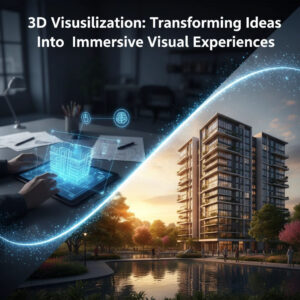
3D architectural rendering has evolved rapidly, with new technologies redefining how architects, real estate developers, and designers present their visions. As 2025 approaches, industry leaders are adopting cutting-edge tools to create hyper-realistic renders that bridge the gap between concept and reality. From AI-driven renders to VR walkthroughs, the landscape is shifting dramatically.
Over the years, the demand for high-quality visualization has increased significantly, pushing professionals in the industry to seek innovative solutions that make rendering more efficient, realistic, and cost-effective. This demand has led to the introduction of advanced rendering techniques that allow for detailed and immersive representations of structures before they are even built.
In this article, we will explore the 10 game-changing 2025 trends in 3D architectural rendering you can’t miss and how these innovations will revolutionize architectural visualization, making designs more interactive, immersive, and sustainable.
The Evolution of 3D Architectural Rendering
3D architectural rendering has come a long way from static sketches and blueprints. The integration of digital tools has enabled:
- AI-Powered Architectural Rendering
- Virtual Reality (VR) Integration
- Augmented Reality (AR) for On-Site Visualization
- Real-time rendering
- Sustainable Design Visualization
- Hyper-realistic Textures and Lighting
- Cloud-Based Rendering Solutions
- Collaborative Design Platforms
- Customizable 3D Rendering Templates
- Integration with Building Information Modeling (BIM)
With a growing demand for high-quality visuals, 3D rendering services have become indispensable for architects, developers, and interior designers worldwide. These services offer various benefits, such as cost savings, better project presentations, improved accuracy, and faster design iterations. As a result, the architecture and construction industries have increasingly adopted rendering as a core element of their design and marketing strategies.
10 Game-Changing 2025 Trends in 3D Architectural Rendering
AI-Powered 3D Architectural Rendering
Artificial intelligence (AI) is revolutionizing the 3D rendering industry. AI architecture render tools are now capable of generating highly detailed and realistic images in a fraction of the time it would take a human artist. These tools use machine learning algorithms to analyze design data and produce renders that are both accurate and visually stunning.
For example, a 3D rendering company in Dubai might use AI to create photorealistic renders of a luxury villa, complete with intricate details like lighting, textures, and landscaping.
Artificial intelligence (AI) is revolutionizing the rendering industry. AI-driven tools can:
- Enhance image quality automatically
- Reduce rendering times significantly
- Generate realistic textures and environments
- Automate repetitive rendering tasks, allowing designers to focus on creativity
- Provide smart recommendations for material and lighting adjustments
Virtual Reality (VR) Integration
Imagine walking through a building before it’s even constructed. With VR integration, this is now possible. Architects and designers are using VR to create immersive experiences that allow clients to explore their projects in a fully interactive 3D environment.
This trend is particularly popular in the real estate sector, where developers use VR to showcase properties to potential buyers. This technology is enhanced by virtual reality (VR), offering immersive walkthroughs of buildings before construction begins. 3D rendering services that integrate VR will lead the industry in 2025.
- VR allows clients to experience a space as if they were physically present
- Enhances client engagement and decision-making
- Saves time and costs associated with design modifications
Augmented Reality (AR) for On-Site Visualization
AR is taking 3D architectural rendering to the next level by overlaying digital designs onto real-world environments. This technology is especially useful for on-site visualization, where architects can use AR to see how a design will look in its actual location.
For instance, a 3D rendering company in Dubai might use AR to visualize a new skyscraper in the city’s skyline, helping stakeholders assess its impact on the surrounding area.
Real-Time Rendering
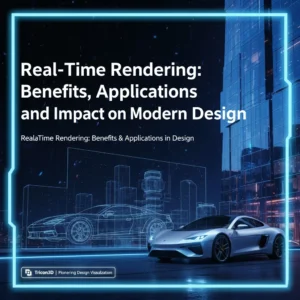
Real-time rendering revolutionizes the 3D architectural rendering industry by offering unprecedented speed and flexibility. Unlike traditional rendering methods, which can take hours or even days to produce a single image, real-time rendering allows architects and designers to make changes to a design and see the results instantly. This technology is powered by advanced software like Unreal Engine, Twinmotion, and Enscape, which leverage powerful GPUs to deliver high-quality visuals in real time.
One of the most significant advantages of real-time rendering is its ability to streamline the design process. Architects can experiment with different materials, lighting setups, and layouts on the fly, enabling faster decision-making and more creative exploration. Additionally, real-time rendering is highly interactive, allowing clients to navigate through a 3D model as if they were walking through the actual space.
Key Benefits of Real-Time Rendering:
- Instant Feedback: Design changes are reflected immediately, reducing the time spent waiting for renders to process.
- Enhanced Collaboration: Teams can work together in real time, making it easier to share ideas and make adjustments.
- Immersive Presentations: Clients can explore designs in an interactive 3D environment, improving their understanding and engagement.
- Cost Efficiency: Faster rendering times mean lower costs for both designers and clients.
- Flexibility: Real-time rendering tools often come with extensive libraries of materials, textures, and assets, making it easy to customize designs.
For example, a 3D rendering company in Dubai might use real-time rendering to showcase a luxury apartment complex. The architect could adjust the lighting to reflect different times of day, swap out furniture, or change wall colors all while the client watches in real-time. This level of interactivity not only enhances the client experience but also ensures that the final design meets their expectations.
Sustainable Design Visualization
As sustainability becomes a top priority in architecture, 3D rendering services are being used to visualize eco-friendly designs. From solar panels to green roofs, architects can use renders to showcase sustainable features and their impact on the environment.
Hyper-realistic Textures and Lighting
One of the most exciting advancements in 3D architectural rendering is the ability to create hyper-realistic textures and lighting. These elements are what make a render go from looking like a digital model to appearing almost indistinguishable from a photograph. With the latest rendering software and techniques, architects and designers can now capture the finest details, whether it’s the grain of wood, the reflection of light on glass, or the subtle shadows cast by furniture.
Hyper-realistic textures and lighting are not just about making a render look good they’re about creating an emotional connection. When clients see a render that looks and feels real, they can better imagine themselves in the space. This level of realism is especially important for high-stakes projects, such as luxury homes, commercial spaces, or large-scale developments, where every detail matters.
Benefits of Hyper-realistic Textures and Lighting:
- Enhanced Visual Appeal: Renders look so real that clients can almost touch and feel the space.
- Better Decision-Making: Clients can see exactly how materials and lighting will look in the final design, reducing the risk of costly changes later.
- Emotional Impact: Realistic renders evoke a stronger emotional response, helping clients connect with the design on a deeper level.
- Marketing Power: Hyper-realistic renders are a powerful tool for selling properties or securing project approvals.
- Attention to Detail: Every element, from the texture of a rug to the reflection in a mirror, is meticulously crafted to ensure perfection.
Cloud-Based Rendering Solutions
Cloud-based rendering is making high-quality 3D architectural rendering more accessible than ever. Architects and designers can now upload their designs to the cloud and receive renders in minutes, without the need for expensive hardware.
Collaborative Design Platforms
Collaboration is key in architecture, and new platforms are making it easier for teams to work together on 3D renders. These platforms allow multiple users to view, edit, and comment on designs in real-time, streamlining the design process.
Customizable 3D Rendering Templates
To save time and resources, many 3D rendering companies are offering customizable templates. These templates can be tailored to suit specific projects, allowing architects to create high-quality renders quickly and efficiently.
Integration with Building Information Modeling (BIM)
BIM is becoming an essential tool in architecture, and its integration with 3D architectural rendering is a trend to watch. By combining BIM data with 3D renders, architects can create highly accurate and detailed visualizations that reflect every aspect of a project.
Conclusion
The future of 3D architectural rendering is bright, with innovations like AI, VR, and real-time rendering set to transform the industry. As we look ahead to 2025, these 10 game-changing trends in 3D architectural rendering will undoubtedly shape the way we design, visualize, and experience architecture.
Whether you’re an architect, designer, or client, staying ahead of these trends will ensure you’re well-equipped to navigate the evolving landscape of 3D rendering services. From hyper-realistic textures to sustainable design visualization, the possibilities are endless.
FAQs: Frequently Asked Questions
What is the difference between 3D rendering and 3D modeling?
3D modeling involves creating a digital representation of an object or structure, while 3D rendering focuses on generating a lifelike image or animation of that model.
How long does it take to create a 3D architectural render?
The time required depends on the complexity of the project and the level of detail required. Simple renders can take a few hours, while more complex projects may take several days or weeks.
Can 3D rendering be used for interior design?
Yes, 3D rendering services are widely used in interior design to visualize spaces, furniture, and decor before implementation.
What software is used for 3D architectural rendering?
Popular software includes Autodesk 3ds Max, SketchUp, Blender, and V-Ray.
How much does 3D architectural rendering cost?
The cost varies depending on the scope of the project, the level of detail, and the 3D rendering company you choose. Prices can range from a few hundred to several thousand dollars.